
 Most practice owners don’t just struggle with hiring these days…
They struggle with what happens after hiring.
Because once someone is in the role, a new tension shows up if you’re not a seasoned manager/CEO:
Am I asking too much?
Am I not being clear enough?
Am I giving too much constructive criticism… or not enough?
And underneath all of that is a bigger fear:
“If I push too hard, I might lose them.”
This episode tackles that exact problem.
Not from theory.
From a real scenario inside one of my coaching calls, where a practice owner is trying to manage a part-time admin and isn’t sure if the issue is workload, communication, or competency.
What You’ll Learn in This Episode
- How to determine whether your employee is overloaded… or underperforming
- Why a lot feedback fails to instill your desired change (even when it’s accurate)
- How to give feedback in a way that actually gets implemented
- A simple weekly meeting structure that eliminates constant micromanaging
- How to decide when to train more vs. when to replace
Why Constant Feedback Backfires
Most practice owners try to fix the problem with more feedback.
More reminders.
More corrections.
More “hey just one more quick thing…”
And over time, it starts to feel like this:
To you → necessary guidance
To them → constant criticism
That’s when things break down.
Not because the feedback is wrong…
But because the delivery system is broken.
The Simple Fix: Stop “Peppering” Feedback
Instead of giving feedback randomly throughout the week…
Consolidate it.
Create structure around it.
One of the simplest ways to do this:
A short, consistent weekly meeting in which feedback is expected, organized, and they are primed to receive it.
And most importantly, it actually gets implemented at a higher level. Using AI recording, summarizing, and task listing is a pro tip everyone should implement to refine SOP’s, ingrain your feedback, and document your corrections in case the employee ultimately needs to be let go.
The Framework That Makes Feedback Land
Inside that weekly check-in, use a simple structure:
Start doing
Stop doing
Keep doing
That’s it.
No overcomplication.
This gives clarity without overwhelm.
And it allows you to balance correction with reinforcement—so they don’t feel like they’re constantly “getting it wrong.”
For example: “Really happy with how things are going overall… In line with our usual weekly meeting structure, I’d like you to start letting me know whenever we get an email or message from a patient expressing dissatisfaction, like we received from Miss Jones yesterday. I’d like you to stop prioritizing any ongoing tasks over answering the phone… if it’s ringing, everything else can wait. I’d like you keep showing such joy and compassion in your interactions with our patients .. it’s wonderful.”
The “Love Sandwich” Still Works (If You Do It Right)
You’ve probably heard of this before.
Positive → constructive → positive.
But most people do it poorly.
They either:
Sound fake
Rush through it
Or skip the reinforcement altogether
Done correctly, it works because it keeps people open, rather than defensive.
And that’s the entire game.
The Hidden Lever: Weekly Structure Beats Daily Correction
This is the big shift.
Instead of:
Constant correction → frustration → inconsistency
You move to:
Structured feedback → clarity → improvement
And over time, something even better happens:
They need less feedback.
Because expectations are clear, and they have been implementing the things you’re telling them in this better-received format.
Your Free Resource: The Ultimate New Employee Onboarding Resource Guide
I’ve got a free resource for you: “The Ultimate New Employee Onboarding Resource Guide,” which will help you quickly create a custom onboarding process that will help ensure all your new hires are set up for the highest levels of success in your practice.
Invest in your team, invest in your practice! Download your free guide now!

Thanks so much for checking out this week’s podcast… hope you enjoy the resource!
The Final Word
Most feedback problems are not really about feedback.
They’re usually a mix of unclear expectations, inconsistent structure, and uncertainty about whether the employee is actually the right fit for the role.
When you create a better system for delivering feedback, you make it easier for good people to improve. And when you get more honest about whether the workload is realistic or the performance is lacking, you make much better decisions as a leader.
That is how you stop guessing, stop overthinking, and start managing with a lot more clarity.
— Jarod
Want Step-by-Step Guidance to Start, Grow, or Transition Your Own Cash-Based Practice?
> Click Here to learn how to start, grow, or transition your own Cash-Based Practice <<
HERE ARE SOME MORE EPISODES ON LEADERSHIP, STAFF MANAGEMENT & PRACTICE GROWTH:

Essential cash practice KPI’s and successful staff meeting agendas
Learn the exact numbers to track and how to run effective weekly meetings that improve accountability and performance.

Weekly Staff Meeting Agenda and KPIs
Discover how to align your team with what actually drives growth so they take ownership of results.

Unlocking the Secrets to Stellar Front Desk Staff Performance
Learn how to train and manage your admin team to improve conversions, communication, and overall patient experience.
MORE RESOURCES TO IMPROVE TEAM PERFORMANCE & PRACTICE SYSTEMS:
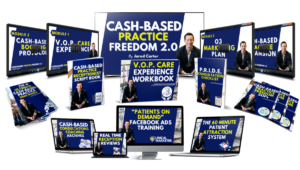
Cash-Based Practice Freedom e-Course 2.0
This course gives you every step, script, process, and resource I’ve used (and coached 1,000+ practice owners through) to build highly profitable, insurance-free practices. It’s all laid out in a perfect step-by-step blueprint … Check out the Course here.
Cash-Based Practice Mastermind

If you want to double your profit per patient and build the practice of your dreams—without relying on greedy insurance companies—this Mastermind coaching program gets you there with: weekly live coaching, a supportive community, and a vault of done-for-you resources and masterclasses to accelerate your growth and avoid costly mistakes. Check out the Mastermind here.

Cash-Based Practice Marketing Intensive
Learn how to keep your phone ringing and your inbox flooded with qualified out-of-network leads using my R.O.I. Marketing Method and the power of AI. This training walks you step-by-step through proven marketing systems that bring patients straight from social media to your schedule.Check out the Masterclass here.