
 A lot of Cash-Pay practices are doing something very smart right now.
They’re using entry-point services to get new customers in the door… things like specialty services and modalities (like shockwave therapy, red light sauna, etc), performance-based training, etc.
And it works…
Ads convert.
Promotions fill schedules.
New Patients and Revenue comes in.
But here’s the problem I keep seeing in most practices doing this …
They struggle to get these new customers to say ‘yes’ to everything else that could benefit them.
For example: pretty much everyone who would benefit from shockwave to speed healing, could benefit even more by getting physical therapy along with the shockwave.
Patients come in for one thing.
They buy one thing.
They leave … even though they clearly need more.
Today’s episode is about fixing that.
Specifically, how to use a brief, intentional assessment and conversation process to help patients see what they actually need, and eagerly say yes to it.
Before you click over to the episode, a quick announcement: I’m hiring at my clinic in Austin and could really use your help. If you know any skilled manual physical therapists in Austin (or who might want to move to Austin) who would love to be paid really well to treat every patient 1-on-1 for a full hour, PLEASE forward this to them or send me an email at Jarod@CarterPT.com.
Click here to see the job post and apply.
What You’re Learn Today:
- Why entry-point services create a lopsided schedule, overloaded with clients Not getting your core service, and how to avoid that
- How to use a short assessment to open patients’ eyes
- The exact language that links services to real outcomes
- How to eliminate “I just want this one thing” patients
- Why setting expectations early increases commitment and retention
1. Entry-Point Services Are Brilliant — But Incomplete
Using entry-point services as a front door into your practice is smart.
The mistake happens after the patient arrives.
Most patients come in thinking:
“This one thing will fix me.”
And if you don’t guide the conversation properly, they’ll leave with:
- Temporary relief
- No long-term solution
- No understanding of the real problem
That’s a process problem that could be costing you thousands.
2. The Assessment Is Your Conversion Moment
Whether someone comes in for a specific service, a discounted visit, or a specialty offering, one thing is always true:
You must assess them.
Not just because it’s best practice — but because it’s your opportunity to identify what’s really driving their issue, show what the entry service alone won’t resolve, and connect your findings to goals they actually care about.
The key is simplicity.
You don’t need a long, exhaustive evaluation.
You need two or three clear findings that explain why the problem keeps showing up.
When patients understand that, everything changes.
3. Paint the Picture (So They Can’t Unsee It)
Here’s where most clinics miss the moment.
They explain findings…
…but never connect them to the future.
Instead, the conversation should sound more like:
“Yes — what you came in for can absolutely help.
But if we don’t address these other factors, you’ll keep re-triggering the issue every time you return to [activity].”
Then you tie it directly to what they want.
Short-term progress.
Long-term capability.
Confidence that they’re not stuck in a cycle.
Now the patient isn’t buying a service.
They’re buying a path forward.
4. Set Expectations Early (or Lose Them Later)
This is where drop-offs are prevented.
You’re not selling visits.
You’re setting expectations for what it actually takes to win.
That means clearly communicating that the plan will evolve, the focus will shift as they improve, and one isolated service isn’t enough to create lasting change.
And yes — this does weed out tire-kickers.
That’s a good thing.
More commitment.
Higher lifetime value.
Better outcomes.
Your Free Resource: Your Free Resource: Cash-Pay Practice Closing Scripts
To make this easier, I’ve got a free resource for you: The Cash-Pay Practice Closing Scripts.
This will help you confidently guide conversations and get more patients to say yes to the level of care they actually need.
These are the same types of scripts I use — and teach my Mastermind members — to turn single-service visits into complete plans of care, reduce hesitation, and help patients feel supported instead of sold.
The scripts walk you through exactly what to say, when to say it, and how to say it — so patients feel educated, confident, and excited to invest in themselves.

Thanks so much for checking out this week’s Podcast… hope you enjoy the resource!
The Final Word
If patients only say yes to what they came in for, one of two things is happening:
You didn’t show them the full picture —
or you didn’t connect it to a future they actually want.
When you assess intentionally, explain clearly, and set expectations early, patients don’t feel sold.
They feel guided.
And that’s when they commit — not just to a service, but to results.
— Jarod
PS. Again, I’m hiring at my clinic and could really use your help … If you know of any skilled manual therapists in Austin (or who might want to move to Austin), who would love to be paid really well to treat every patient 1-on-1 for a full hour, PLEASE forward this opportunity to them. You can click HERE to see the job post and apply.
WANT STEP-BY-STEP GUIDANCE TO START, GROW, OR TRANSITION YOUR OWN CASH-BASED PRACTICE?
>> Click Here to learn how to start, grow, or transition your own Cash-Based Practice <<
HERE ARE SOME MORE EPISODES ON PRACTICE GROWTH & RECURRING REVENUE:

CBP 206: 4 Keys to Minimize Patient Drop-Off and Get Full POC Commitment
This episode breaks down why patients disappear at 70–80% better—and the exact systems and conversations that keep them committed through their full plan of care.

CBP 212: Unlocking the Secrets to Stellar Front Desk Staff Performance
Learn how front-desk follow-up, reminder systems, and conversion metrics directly impact retention—and how small admin improvements prevent patients from slipping through the cracks.

CBP 290: The Follow-Up Strategy That Prevents Losing Patients to Insurance Changes
A deep dive into how to systematically follow up with dropped-off and discharged patients, reactivate those lost to insurance issues, and prevent revenue leaks with simple tracking systems.
MORE RESOURCES TO HELP YOU BUILD RECURRING REVENUE AND LIFELONG PATIENTS:
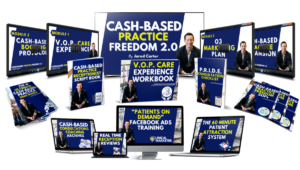
Cash-Based Practice Freedom e-Course 2.0
This course gives you every step, script, process, and resource I’ve used (and coached 1000+ practice owners through) to build highly profitable, insurance-free practices. It’s all laid out for you in a perfect step-by-step blueprint …Check out the Course here.
 How to Answer “Do You Take My Insurance?”
This powerful system helps you master the initial patient phone call so you can help prospects make the best decisions about their healthcare, and maximize conversions of phone calls into cash-pay patients … even if the very first thing out of their mouth is, “Do you take Blue Cross?”. Check out the Masterclass here.
Cash-Based Practice Mastermind
If you want to double your profit per patient and build the practice of your dreams—without relying on greedy insurance companies—this Mastermind coaching program gets you there with: weekly live coaching, a supportive community, and a vault of done-for-you resources and masterclasses to accelerate your growth and avoid costly mistakes. Check out the Mastermind here.